
task creation
from task idea to working evidence
— one loop, repeated until the task holds —
— one loop, repeated until the task holds —
1
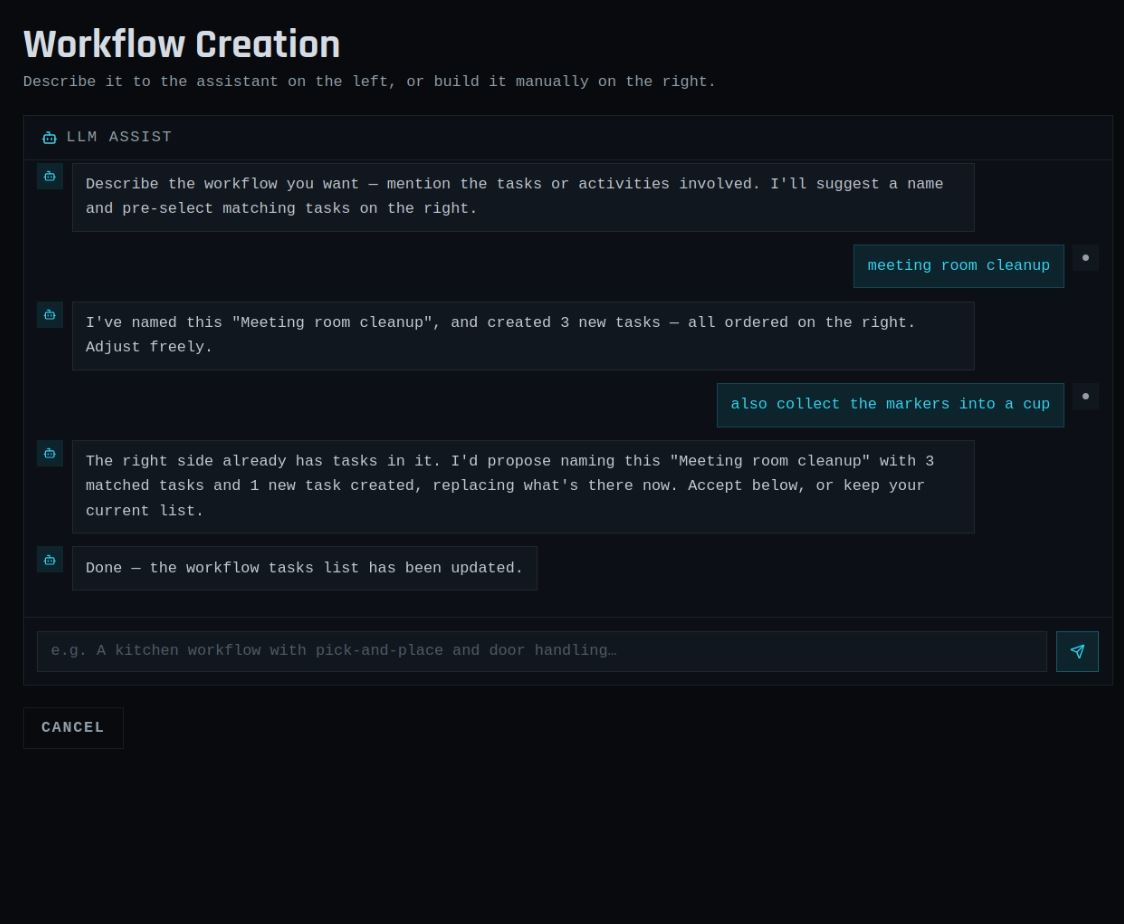
describe
State the task in plain language. The tool proposes a task spec you confirm or edit — no robotics engineer needed to get started.
2
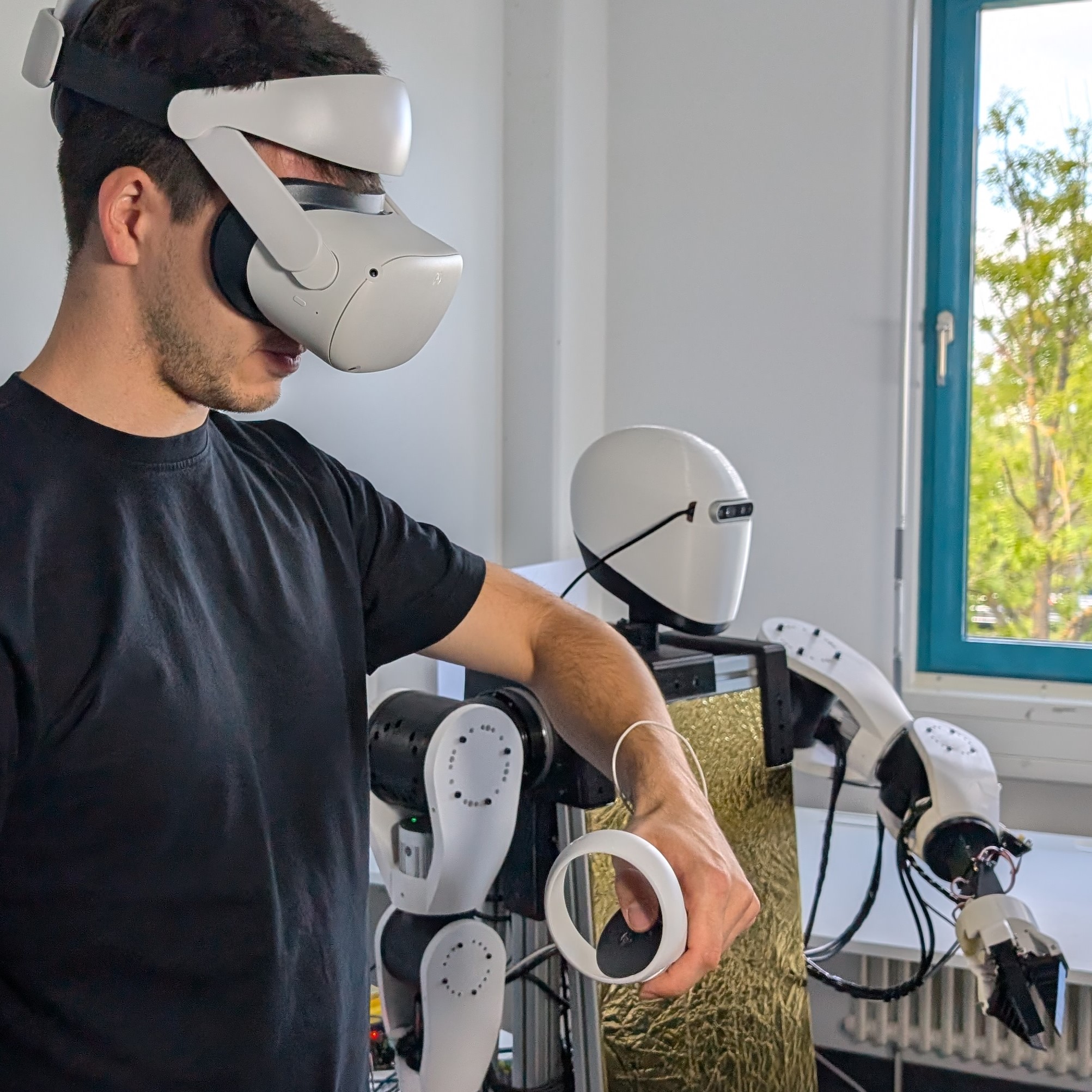
collect
Demonstrations and AI guided runs capture how the work is really done, complemented by simulated data. A task model trains automatically.
3
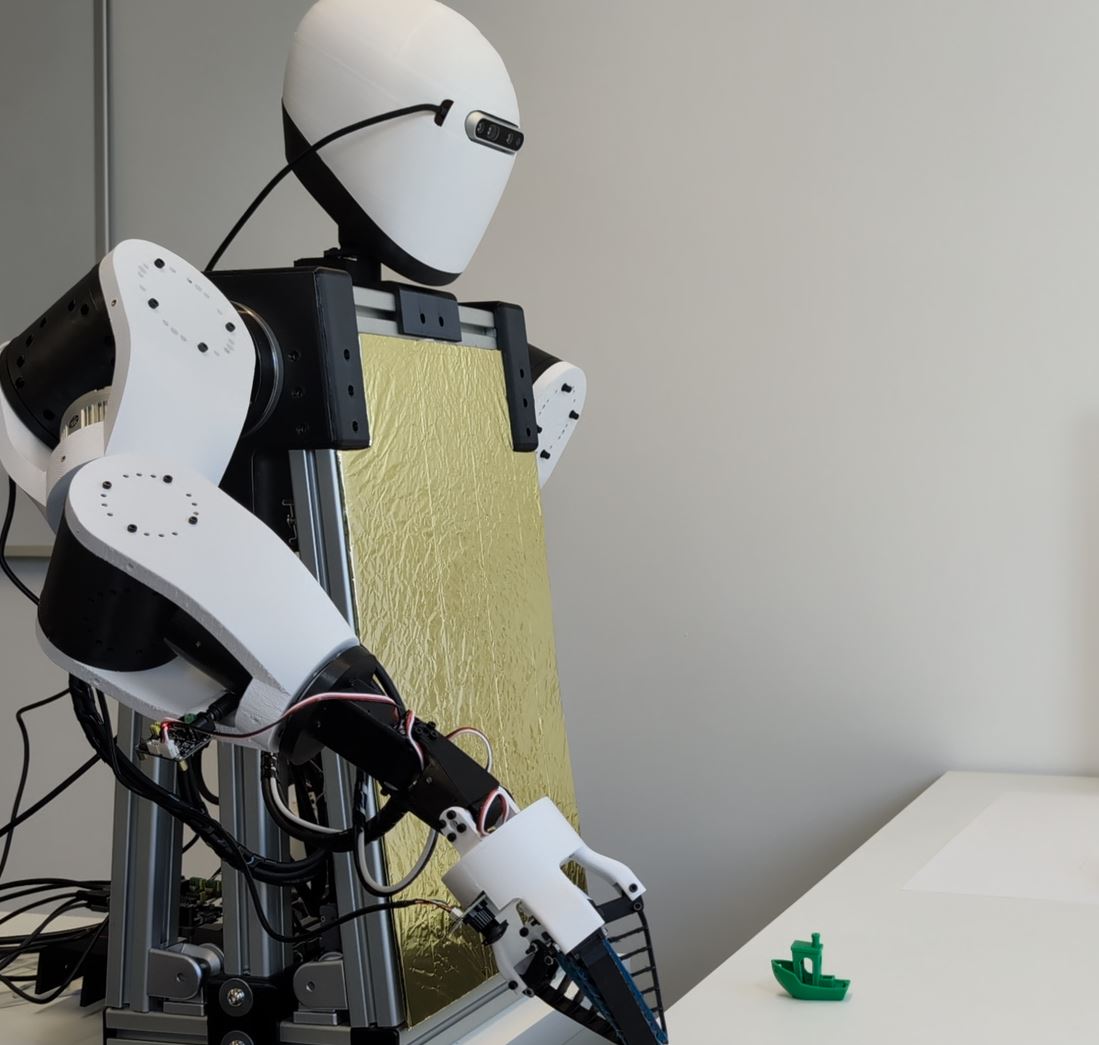
test
The task runs in simulation and on the real robot, supervised. Gaps and edge cases get flagged and fixed in the same session.
No robotics experience is needed to create a task — and developers can still go deeper into data and models when they want to. Every pass leaves a confirmed spec, a trained model, and a logged trial.
exploration phase
We are walking factories and talking with teams about which tasks a humanoid can safely take on today. Each conversation sharpens the platform and moves us toward a first pilot on our devkit.
Have a workflow in mind? We give fast, direct advice on whether and how a humanoid could fit.
contact@jarm.ai ->
Have a workflow in mind? We give fast, direct advice on whether and how a humanoid could fit.

example task
pick & place
Parts between bins, trays, and stations is the most repeatable starting point for a supervised pilot on our devkit.

example task
move object
Carrying and repositioning objects across the workspace, bringing a tray to the next station or handing over a tool.
we also explore
your task?
Manufacturing is where we start — we also explore logistics, construction, agriculture, and others. Tell us your task ->
Long term, jarm does not build tasks — tasks are built on the jarm platform. Each exploration, simple and advanced, provides valuable insights.* images in this section "exploration phase" are ai generated
philosophy
Body and brain are advancing. Usability is the underbuilt layer. Most humanoid companies optimize for one of two extremes: a single narrow use case, or one large model meant to do everything. Both create friction for the people who have to put a robot to work, and make scaling harder.
jarm builds below the use-case layer. The humanoid base, the core stack, and the tooling that make task creation easy, so labs, startups, and companies can build on a practical platform instead of competing with it. The question is no longer whether humanoids can do useful work, but whether they are usable enough to matter in real workflows.
multifaceted demand of humanoids
fragments from real conversations about endusage areas that exist today
Vehicles come back from construction sites needing daily pressure-washing, then inventorying, and both could be handled by a humanoid robot.
Jan
construction professional
Seasonal work at the vineyard depends on extra hands, but finding people for these tasks is becoming increasingly difficult.
Julia
local vineyard owner
From preparing the base to checking grow states and harvesting, there are many steps in mushroom growing where robotic help could make a difference.
Patrick
co-founder, BetterMyco
At home, a humanoid could help my father with his daily routine in everyday rooms and up the stairs, so he can stay in his own home a few years longer.
Marc and Anna
support their aging parents
On site, a humanoid could move through changing work environments and help with prep, inventorying, and demanding tasks like core drilling.
Leo
electrician
Changing shopping habits and reduced staffing make regular opening hours harder to maintain, but a humanoid could help keep the shop open.
Lisa
local store owner
If a humanoid pre-assembled the parts I prep by hand every morning, I could take on bigger orders without hiring.
Thomas
workshop owner
platform UX
Task-enabling, not task-owning. You bring the domain logic — we run the safe base layer underneath it. Domain experts create tasks without robotics know-how, and developers get the same platform to go deeper. Tasks stay modular building blocks: picking, grabbing, using tools, interacting with an environment, combined and adapted to context.
One integrated platform: workflow tool, jarmOS, humanoid. Usability is decided where these layers meet, so we control the interfaces between them and integrate the best available parts and AI underneath, rather than trying to out-build the whole industry.
partners & programs
the platforms and startups we build with


why jarm
Founder-led, product-focused, self-financed through prototype 1. jarm is built by a small team led by Jacob Munke with a strong focus on usability, adaptability, and humanoid enablement. It has the execution discipline of a company that built its first devkit on its own capital.
Built in Europe, close to robotics and AI talent. Schweinfurt sits in northern Bavaria, a region packed with production companies, so on-site exchanges with manufacturers are only a short drive away. With the THWS Center for Robotics and JMU Würzburg next door, jarm draws on European engineering talent and research collaborations.